Weekly Evidence Roundup · October 28, 2025
Beyond Chatbots: The Transformative Potential of AI-Augmented Patient Communication
In the rapidly evolving landscape of healthcare, the integration of artificial intelligence (AI) into patient communication presents a transformative opportunity to enhance care delivery. Unlike AI chatbots, which have been scrutinized for their potential risks in mental health applications, AI-augm
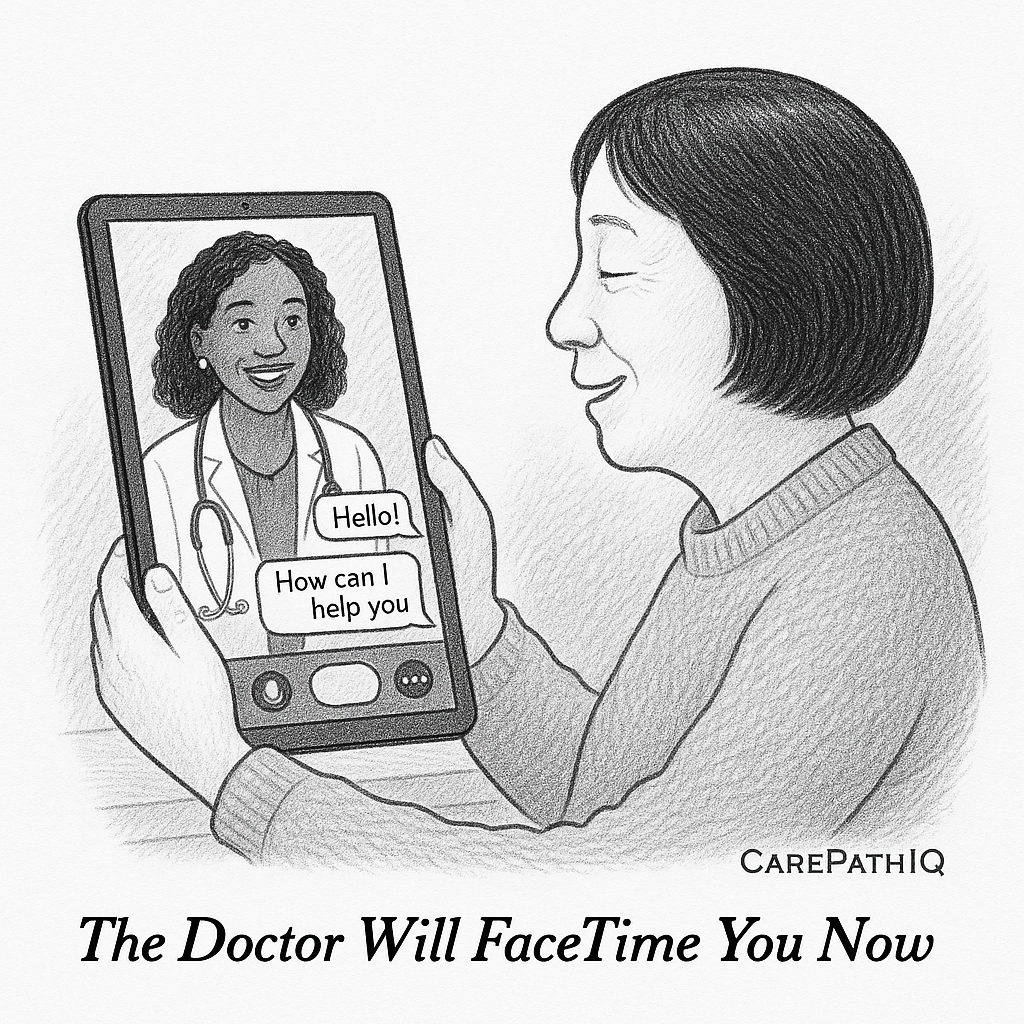
In the rapidly evolving landscape of healthcare, the integration of artificial intelligence (AI) into patient communication presents a transformative opportunity to enhance care delivery. Unlike AI chatbots, which have been scrutinized for their potential risks in mental health applications, AI-augmented communication tools that provide real-time feedback and subtle nudges offer a promising avenue to support clinicians and patients alike. This distinction is crucial for understanding how we can harness AI’s potential while maintaining the human connection that is essential to effective healthcare.
The Critical Distinction: Chatbots vs. AI-Augmented Communication
The fundamental difference between AI chatbots and AI-augmented communication tools lies in their role and design philosophy. AI chatbots operate as standalone systems that attempt to replace human interaction, while AI-augmented tools are designed to support and enhance human clinicians. This distinction becomes particularly important in mental health contexts, where the risks of standalone AI systems are well-documented.
Recent research from Brown University reveals that AI chatbots frequently violate core mental health ethics standards, including inadequate crisis management, reinforcing negative self-beliefs, and creating a false sense of empathy. These systems lack the ability to truly understand context, emotional nuance, and the complex web of factors that contribute to mental health challenges.
Furthermore, AI chatbots can provide incorrect or misleading advice, potentially exacerbating mental health issues. Large language models have been found to oversimplify and misrepresent scientific findings, which can be particularly dangerous in medical contexts. When patients are seeking help for mental health concerns, receiving oversimplified or inaccurate information can lead to harmful self-diagnosis or inappropriate self-treatment approaches.
The Promise of AI-Augmented Patient Communication
Moving beyond chatbots, AI-augmented communication tools are designed to assist clinicians by providing real-time feedback and nudges during patient interactions. These tools aim to enhance the quality of communication without replacing the human element essential in healthcare.
AI-augmented systems can analyze ongoing conversations and provide clinicians with immediate insights that might not be apparent in the moment. These systems can synthesize evidence-based protocols and live patient data to ensure that clinical decisions are consistent and aligned with care standards.
The Sibly platform, as described in recent research, demonstrates the power of AI-augmented communication through its intelligent nudging system. The platform provides health coaches with digital notifications or “nudges” that assist by highlighting information and recommending next steps. These nudges personalize recommendations based on member priorities and goals.
For example, if a member is interested in weight loss, nudges suggest relevant content and employer-sponsored benefits related to weight loss. If a member is concerned about their mood, nudges can suggest screening measures, self-help materials, and employer-sponsored mental health benefits related to this member’s concern. The health coaches refine AI nudges through real-time feedback to the model, creating a continuous learning loop that improves over time.
Advanced AI systems can also analyze sentiment and emotional cues in real-time, providing clinicians with insights into patient emotional states that might not be immediately apparent. The Sibly platform uses machine learning tools that reliably detect 40 specific topics, measure sentiment fluctuations, identify the start and end of text conversations, and suggest optimal next steps to health coaches. This capability is particularly valuable in mental health contexts, where understanding emotional nuances can be crucial for effective intervention.
Implementing AI-Augmented Tools in Clinical Workflows
The integration of AI into clinical workflows offers several benefits that extend beyond simple automation to create more effective, personalized care experiences. AI-powered medical scribes can transcribe patient consultations and convert them into clinical notes, reducing manual note-taking and supporting administrative workflows. This automation allows clinicians to focus more on patient interaction rather than documentation, potentially improving both the quality of care and provider satisfaction.
Clinical decision support systems (CDSS) provide clinicians with knowledge and patient-specific information to enhance decision-making. These tools include alerts, reminders, and diagnostic support, often leveraging AI to analyze clinical data and improve care quality. By integrating these systems into patient communication workflows, clinicians can access relevant information without interrupting the flow of conversation.
AI-powered assistants can assess patient needs, prioritize cases, and direct patients to appropriate care pathways, reducing wait times and improving access to urgent care services. This capability is particularly valuable in mental health contexts, where timely intervention can be crucial for patient outcomes.
The Sibly Model: A Case Study in Effective Implementation
The Sibly platform provides an excellent example of how AI-augmented communication can work effectively in practice. The platform combines human health coaches with AI support to deliver personalized, high-quality care that maintains the human connection while leveraging technology’s capabilities.
Sibly’s approach centers on human health coaches who are carefully selected for empathy and trained in evidence-based practices. The AI system supports these coaches rather than replacing them, providing real-time feedback and suggestions that enhance their ability to deliver effective care. The platform uses machine learning to continuously improve its recommendations based on real-world interactions, with health coaches providing feedback on AI suggestions to create a learning loop that makes the system more effective over time.
The platform maintains rigorous quality assurance through regular monitoring of coach interactions and adherence to evidence-based practices. Sibly uses AI to detect adherence to training skills and provides real-time feedback, ensuring that 90% (387/430) of coded quality assurance conversations meet competency guidelines. This approach ensures that the AI remains aligned with human values and clinical best practices.
The Sibly platform has demonstrated measurable outcomes in supporting mental health through AI-augmented communication. According to the published research, the platform provided quick access to interactive human coaching, with a median response time of 132 seconds and an average of 197 seconds. Sentiment analysis showed that 57% (878/1540) of conversations increased in positive emotions, and coaches maintained strong fidelity to motivational interviewing techniques.
In a subset of participants providing pre-post self-report data, the platform demonstrated significant improvements: participants reported an 80% decrease in severe distress, a 19% decrease in unhealthy days, and an 18% increase in productivity. These results demonstrate the potential of AI-supported text coaching as an efficient, scalable, and effective workplace mental health solution.
Ethical Considerations, Challenges, and the Future
While AI-augmented tools offer significant advantages, ethical considerations remain paramount. AI systems must be designed with robust privacy protections, ensuring that patient data is handled securely and in compliance with healthcare regulations. This includes implementing appropriate data encryption, access controls, and audit trails to protect sensitive information.
AI systems must also be carefully designed to avoid perpetuating existing biases in healthcare. This includes ensuring diverse training data, regular bias testing, and ongoing monitoring to identify and address potential discriminatory outcomes. Perhaps most importantly, AI-augmented communication tools must be designed to support rather than replace human judgment. Clinicians must retain the ability to override AI suggestions and maintain their professional autonomy in patient care decisions.
Successful implementation of AI-augmented communication tools requires comprehensive training for healthcare providers on the ethical use of AI in patient communication, emphasizing the importance of maintaining human oversight, recognizing AI limitations, and using technology to enhance rather than replace human connection. Organizations must develop tools that integrate seamlessly into existing clinical workflows, ensuring that technology supports rather than disrupts the patient-provider relationship.
As AI technology continues to advance, the potential for AI-augmented patient communication will only grow. Future developments in natural language processing, emotion recognition, and predictive analytics will likely enhance the capabilities of AI-augmented communication tools, enabling more sophisticated real-time feedback and more personalized patient interactions.
AI-augmented communication tools will increasingly integrate with broader clinical pathways, providing seamless support throughout the patient journey. This integration will enable more coordinated care and better outcomes for patients. Perhaps most importantly, AI-augmented communication tools have the potential to scale access to high-quality care, particularly in underserved areas where provider shortages are most acute. By supporting clinicians with AI assistance, we can extend the reach of expert care to more patients.
Restoring the Human Connection
The future of healthcare lies not in replacing human providers with AI, but in using AI to enhance the human elements that make healthcare effective. AI-augmented patient communication tools offer a promising path forward, providing real-time feedback and intelligent nudges that support clinicians in delivering better care.
By lifting cognitive and operational burdens, these tools can return time to the bedside—restoring the human connection that enables clinicians to thrive and patients to achieve their healthiest lives. This vision requires careful development, rigorous evaluation, and ongoing commitment to the ethical principles that guide healthcare.
The journey toward this future begins with recognizing that every patient interaction matters, and that technology should serve to amplify rather than diminish the unique needs and capabilities of each individual. Through thoughtful development and implementation of AI-augmented communication tools, healthcare organizations can create experiences that are not just technologically advanced, but truly human-centered.
References
1. Brown University. (2025). AI chatbots frequently violate core mental health ethics standards. Retrieved from https://www.brown.edu/news/2025-10-21/ai-mental-health-ethics
2. Wilbourne, P., Mirch-Kretschmann, S., Walker, D., Varghese, M., & Arnetoli, R. (2025). AI-Enabled, Text-Based Health Coaching and Navigation for Employees to Support Health Outcomes: Pre-Post Observational Study. *JMIR Formative Research*, 9, e64553. https://doi.org/10.2196/64553
3. Vaidyam, A. N., Wisniewski, H., Halamka, J. D., Kashavan, M. S., & Torous, J. B. (2019). Chatbots and conversational agents in mental health: a review of the psychiatric landscape. *Canadian Journal of Psychiatry*, 64(7), 456-464. https://doi.org/10.1177/0706743719828977
4. Sadeh-Sharvit, S., & Hollon, S. D. (2020). Leveraging the power of nondisruptive technologies to optimize mental health treatment: case study. *JMIR Mental Health*, 7(11), e20646. https://doi.org/10.2196/20646
5. Understanding the link between chronic disease and depression [NIH Publication No. 24-MH-8015]. (2024). National Institute of Mental Health. Retrieved from https://www.nimh.nih.gov/health/publications/chronic-illness-mental-health